Key Takeaways
- An electric fireplace produces its flame with light rather than combustion, so there is no smoke, soot or ash
- Heat comes from a separate electric element and fan, and can be switched off so the flame runs on its own year-round
- No chimney, flue or ventilation is needed, so one can go in almost any room
- The three main formats are freestanding, wall-mounted and built-in
- Flame realism ranges from simple LED through 3D optics to projection-based systems marketed as holographic
What is an Electric Fireplace?
An electric fireplace creates the appearance of a fire using light rather than combustion. Because nothing is actually burning, it produces no smoke, soot or ash, and it has no effect on your indoor air quality.
All it needs to run is electricity. With no chimney, flue or ventilation required, it can be installed quickly and placed almost anywhere: living room, bedroom, kitchen or office.
Despite the flame being an effect rather than a fire, it can look convincing, and many models let you adjust the brightness and choose between different flame colours. Heat and flame operate independently, so you can run the flame effect on its own during warmer months. Many models can also be controlled by remote or a phone app.

How Does an Electric Fireplace Work?
There are two separate systems inside the unit, and understanding that they are separate explains most of how these fireplaces behave.
The heat
Heat comes from a built-in electric heating element, usually a coil or resistance element. When it is switched on, a fan blows the warmed air out into the room. Most models offer several heat settings, and many include a thermostat so the element cycles rather than running constantly.
With the heater off, the unit stays cool to the touch, which is why the flame effect is safe to run all year. With the heater running, the outlet grille and the area around it become warm, so keep furniture, curtains and rugs clear of the airflow.
The flame
The flame is produced by LEDs combined with reflective surfaces. The LEDs supply the colour and movement, while mirrors and angled glass multiply and scatter that light to give the impression of flames with depth. Decorative elements sit in front: moulded logs, crystals or stones, often with their own small LEDs to suggest glowing embers.
Controls and safety
Starting one is usually a single button on the unit or the remote. Beyond that, electric fireplaces include built-in safety features that fuel-burning fires cannot offer, most importantly temperature sensors and an overheat cut-out that shuts the element down automatically. Many also have a child lock.
Types of Electric Fireplace
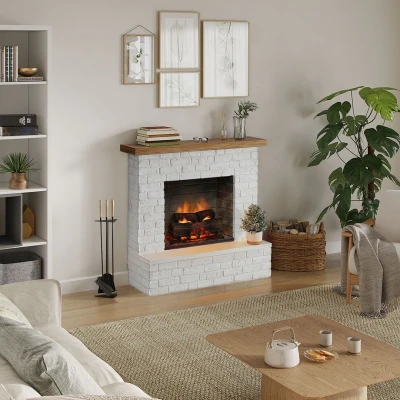
Freestanding models are the simplest. They stand on the floor or sit inside an existing fireplace opening, and all they need is a socket. They cover a wide range of styles, from stoves that mimic a wood burner to modern mantel suites.
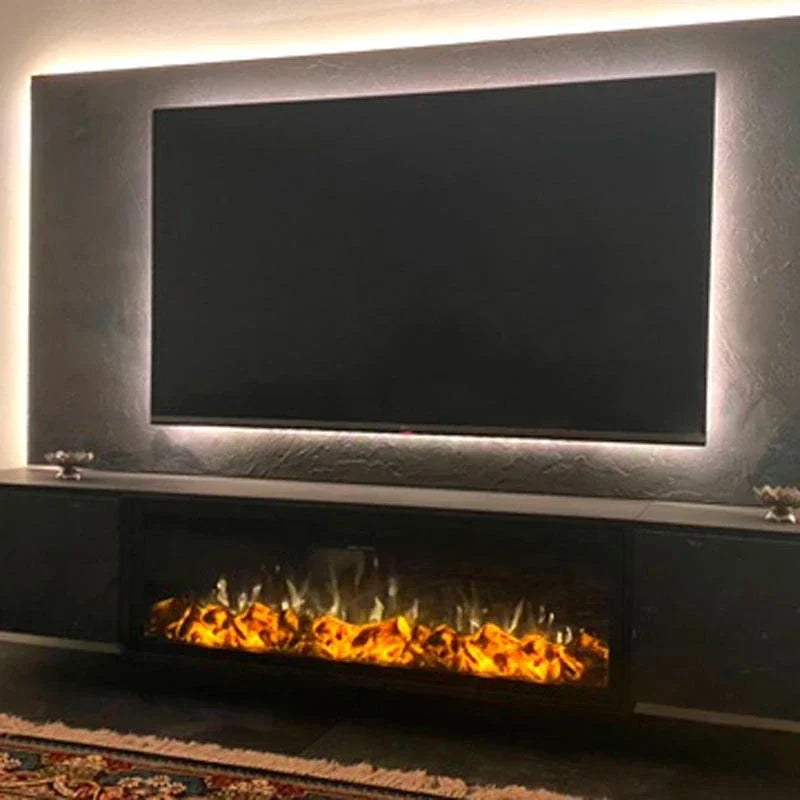
Wall-mounted models save floor space, which makes them a good fit for smaller homes and flats. Fitting one is comparable to hanging a flat-screen TV, so it does not normally require a professional installer. Our installation guide covers what to check first.
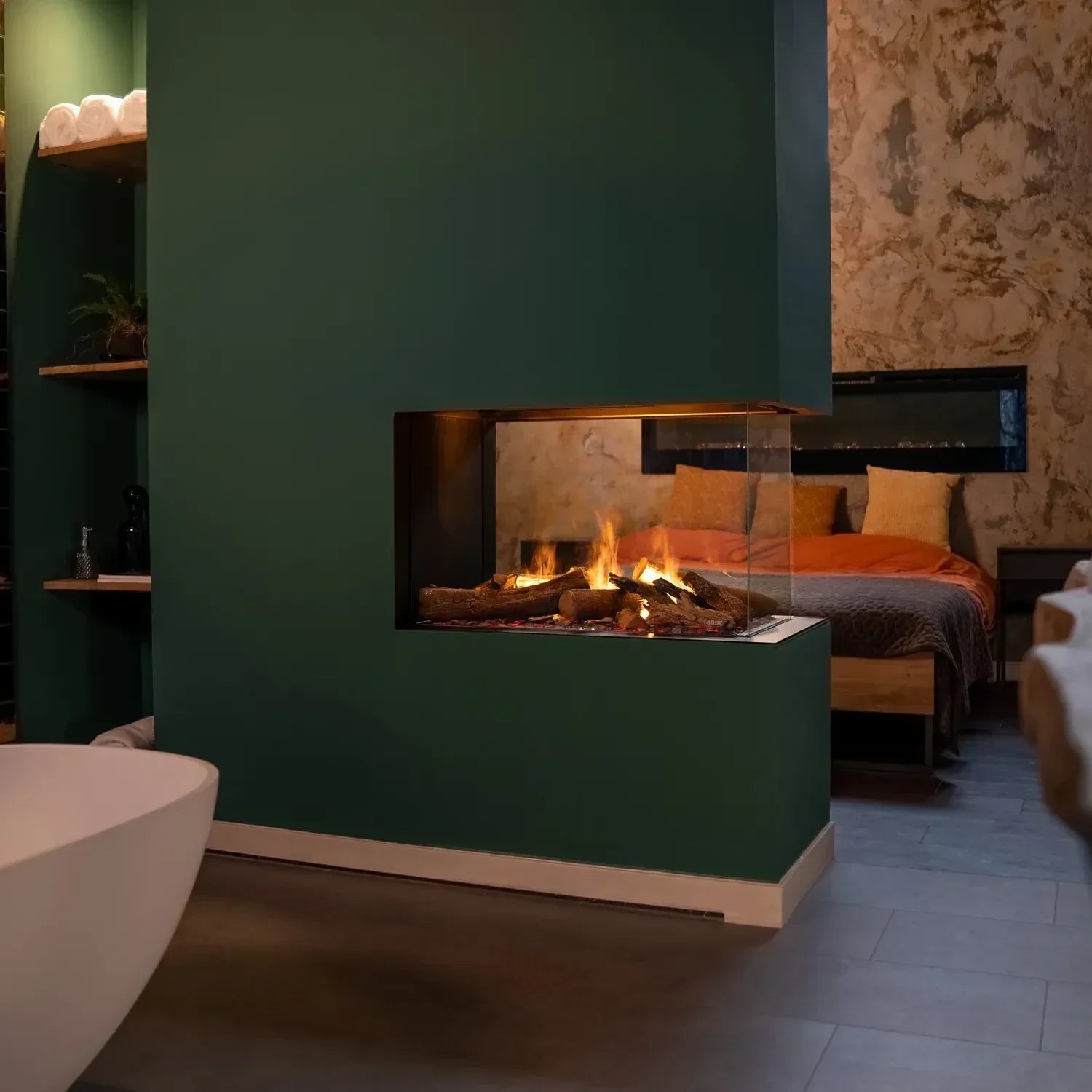
Built-in inserts sit inside the wall so only the glass is visible, giving the cleanest finish. They can often be fitted into an existing opening left by a wood stove or older fireplace. Options range from single-sided through see-through and corner units to three-sided panoramic designs.

How Realistic Do They Look?
Realism varies a great deal, and it is worth knowing what separates the tiers before you compare models.
Basic LED systems project light onto a flickering surface. They read well from across a room and are the most affordable option, but the flame sits visibly on a surface rather than in space. 3D optics add angled glass and partial mirrors to layer reflections, producing genuine depth that holds up better at close range and from different angles.
Projection systems go further again, displaying recorded footage of real fire. Our guide to realistic electric fireplaces compares these technologies in more detail. As a rule of thumb, the further you sit from the fire, the less the difference between tiers matters.
_54660.webp)
What is a Holographic Fireplace?
A holographic fireplace is an electric fireplace that uses digital projection rather than LED backlighting. High-resolution LCD or OLED screens play footage of real flames, which is then directed onto angled beam splitter glass or onto a physical log set.
The name is generous. These are not holograms in the strict sense. The technique is the Pepper's Ghost illusion, a stage trick dating from the nineteenth century, brought up to date with modern optics and video. The beam splitter lets you see the physical logs and the projected flames at the same time, so the flames appear to move around and through the logs with no visible screen behind them.
Many models add micro-LEDs inside the log set to suggest glowing embers, plus speakers reproducing the crackle of burning wood. Heat output typically runs from around 800W to about 1.5kW and works independently of the flame effect. Wi-Fi, app control and voice assistant support are common at this end of the market.
A Note on Water Vapour Fireplaces
One related category sits outside everything above. Water vapour fireplaces create their flame from an ultra-fine mist lit by LEDs, so the effect occupies real space rather than being an optical illusion, and you can pass your hand straight through it. The trade-off is upkeep, since the water tank needs refilling and periodic cleaning. We list these separately, so browse there if that appeals.
If you have questions about any of this, contact us and we will be glad to help.